
The Best Home Defense Ammo Guide: Stopping Power, Overpenetration, and Safety
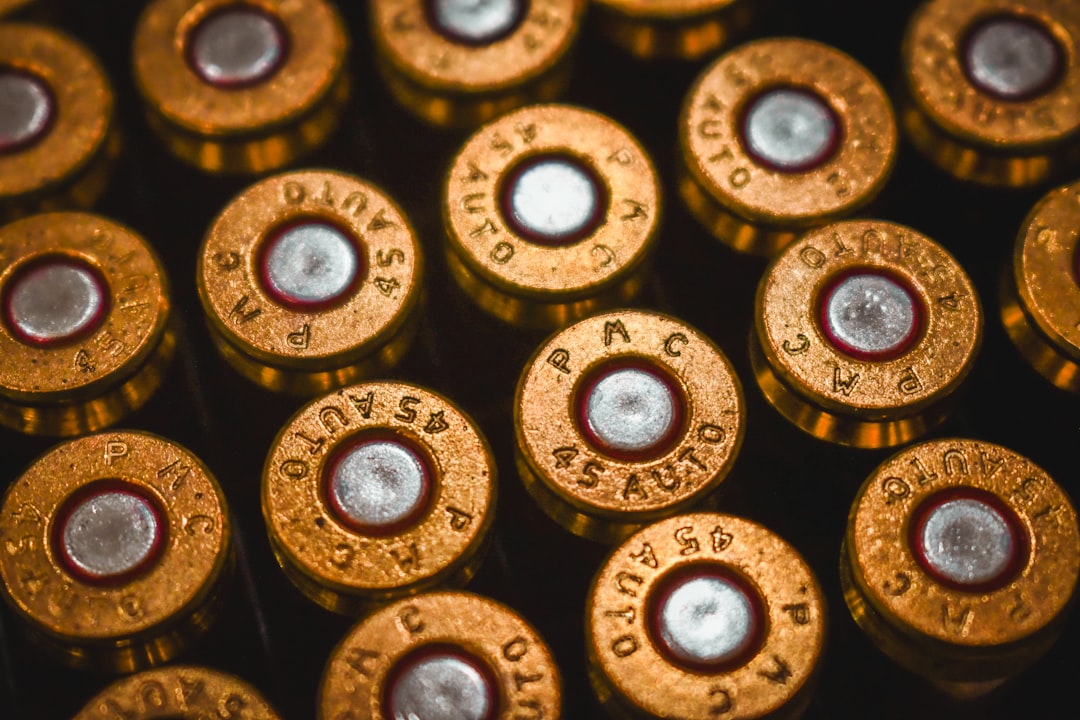
Home defense ammo balances stopping power with controlled penetration to keep your family safe. This type of self-defense ammunition is engineered to expand on impact without traveling too far afterwards, helping keep the damage contained. This guide covers the top-performing indoor ammunition to help you find the best ammo for your firearm and living environment.
What Makes the Best Home Defense Ammo?
Home defense ammo is specifically designed for at-home, defensive scenarios. It's made to deliver the stopping power you expect in those situations with improved accuracy and reliability. When comparing options, there are a few considerations you'll want to keep in mind, especially penetration, expansion, and overall consistency.
Range ammo differs in that it’s designed for high-volume practice, using simple, cost-effective designs like Full Metal Jackets (FMJs). These are easier to manufacture and consistent enough for training settings where you work on fundamentals and recoil control.
However, range ammo isn’t engineered for life-or-death situations like self-defense rounds are. Their features include specialized hollow points and bonding processes to deliver a more controlled expansion on impact while limiting penetration afterward. This makes them safer and more reliable in close quarters, like bedrooms, hallways, stairwells, and living rooms.
Four Characteristics That Define Quality Home Defense Ammo
When purchasing ammo to protect your home and family, look for rounds with the following characteristics:
- Stopping power: Defensive ammo should deliver an immediate, incapacitating force that stops the threat in its tracks. That means choosing ammo that’s built to transfer energy efficiently and deform reliably through controlled expansion.
- Accuracy and reliability: Defensive rounds are typically manufactured to higher standards to cycle reliably without error. They should deliver consistent powder charges and meet the strictest quality control standards.
- Penetration control: This is a major factor in defensive ammunition. The best defensive rounds are designed to penetrate enough to stop an attacker without endangering people behind walls.
- Expansion and energy transfer: Expansion helps defensive rounds slow down safely after impact. When a bullet mushrooms outward, its surface area increases, dumping more energy into the target and reducing the chance of the bullet exiting the body.
Each of these features can impact whether a given defensive ammo is right for your needs. But it’s also important to consider real-world factors, like the layout of your home. The distance between your bedroom and others, the kinds of walls you have, and the angles you can shoot from all matter when making your selection.
Why Stopping Power Is So Important in Self-Defense
Stopping power is often misunderstood in the context of self-defense. It’s not just determined by caliber size and velocity, but by several factors working together. When a bullet makes contact with a target, these three things influence how much stopping power it delivers:
- Velocity: Faster-moving bullets carry more energy and are more likely to expand as long as their design allows for it.
- Mass: Heavier bullets typically push deeper into the target but may expand differently based on their construction.
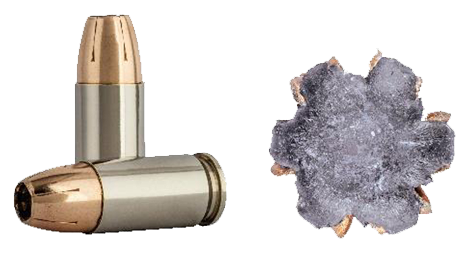
- Bullet design: Hollow points, bonded cores, and bullets with polymer tips are designed to change shape on impact. This helps defensive ammo provide high stopping power with less follow-up penetration.
Defensive rounds work by piercing the target, then slowing down through targeted expansion. This provides the stopping power you need while keeping the impact more contained.
Caliber Considerations for Home Defense
Caliber may not be the only factor that impacts stopping power, but it remains a significant one. People often choose from the following options based on the trade-offs they’re comfortable managing:
- 9mm: An excellent middle ground, with consistent expansion and manageable recoil. Modern 9mm hollow points are a solid choice for most homeowners.
- .45 ACP: Slower but heavier, .45 ACPs have a long track record of effectiveness and deliver a wider wound channel. Their recoil is stronger, but some shooters prefer these shooting characteristics.
- .40 S&W: This option sits between 9mm and .45 ACP, offering snappier recoil with strong stopping power, especially in bonded defensive loads.
- .357 Magnum: Powerful and reliable, .357 Magnums are especially used in revolvers. However, they are very loud indoors and produce more recoil, which can be a concern for less experienced shooters.
The key thing to note when choosing your caliber is that more power doesn’t always mean a better defense. You want ammo that delivers enough force to stop a threat but not so much that it will penetrate every wall in your home.
What Is Overpenetration, and Why Should You Avoid It?
Overpenetration is one of the main issues to avoid when choosing defensive ammunition. It happens when a bullet punches through its target while retaining enough force to still cause damage. This is problematic in home defense situations where excessive force can mean a bullet entering a child’s room or hitting a neighbor’s home.
In a panic situation, you won’t be able to control every variable, like the exact angle of your shot. That makes it important to take precautions, like choosing a bullet that will stop before it penetrates drywall, thin wooden studs, hollow-core doors, large windows, and open entryways.
These common elements of modern homes provide almost no resistance to high-velocity FMJ rounds. Choosing ammo designed for limited penetration reduces the danger significantly by slowing the bullet after it hits an initial target. For many firearm owners, that means choosing from one of the following types of ammo:
- Jacketed Hollow Points (JHP): This is the gold standard for defensive handgun ammo, featuring an expansion that slows the projectile and increases energy transfer to the original target.
- Bonded JHPs: These feature a jacket and core that remain fused as they pass through barriers, providing more controlled, predictable penetration.
- Controlled-Expansion Rifle Rounds: Best for AR-15 platforms, these polymer-tipped or bonded rounds reduce overpenetration in rifles.
- Frangible Ammo: Designed to disintegrate on impact with hard surfaces, these rounds are useful in close-quarter situations, like apartments with shared walls.
Which Ammunition Types Are Best for Home Defense?
The best type of ammo for your home defense needs will vary based on the kind of firearm you use, among other factors. Here’s a closer look at the best options for handguns, shotguns, and rifles.
Handgun Ammo
Handguns are the most widely used home-defense firearms because of their compact size and maneuverability. Some of the most popular defensive calibers include:
- 9mm: Combining reliable expansion with manageable recoil
- .40 S&W: Delivering stronger recoil and power
- .45 ACP: Offering a heavy, slow, and accurate shot
- .357 Magnum: Designed for high power, loud indoors
Each of these calibers is available in defensive bullet types at Able’s Ammo. You can choose from JHPs, bonded JHPs (for added barrier penetration), and frangible bullets for homes with tighter layouts.
Note that compact and subcompact pistols become more reliable when paired with rounds engineered for lower velocities. Ammunition like Hornady Critical Defense and Speer Gold Dot Short Barrel are ideal for these platforms. Many owners of these smaller pistols also add laser sights & grips to improve target acquisition in low light or under stress, when finding a traditional sight picture can be harder on a compact frame.
Shotgun Ammo
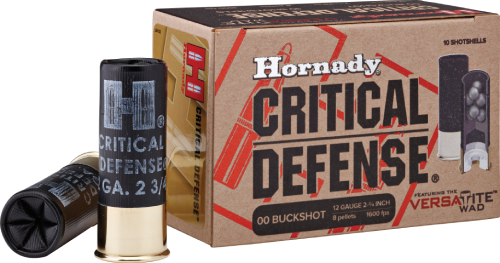
Shotguns carry substantial stopping power, but can increase the risk of over-penetration in home defense scenarios. If you’re protecting your home with one, it’ll be even more important to choose the right shell.
Buckshots are the standard defensive load, offering strong stopping power and predictable penetration. Birdshots are less penetrating but don’t always have the power to stop threats reliably. Slugs are more powerful, but tend to penetrate too deeply for close-quarters situations. Shooters looking for lighter-recoiling options may also consider 410 gauge shotgun shells for compatible firearms.
You should know that shotguns fired in typical hallways and living rooms won’t create broad spread patterns. At 10 to 15 feet, they may only be the size of your fist, which can impact how you need to aim at various ranges.
Rifle Ammo
Modern rifles are becoming increasingly popular for home defense, thanks to their maneuverability and ease of control when paired with the right ammo. Some homeowners choose them for benefits like:
- Extremely low recoil
- Faster follow-up shots
- Excellent accuracy
- Red dot readiness
- Ergonomic handling
However, round choice remains an important concern. Standard FMJ rounds can penetrate deeply and uncontrollably, which is the last thing you want in a home defense situation.
Lightweight, expanding rounds are a better option for rifle platforms. For the best combination of performance and safety, look for ammo like polymer-tipped expanding bullets, bonded soft points, and controlled expansion rounds.
How Do You Choose Between Defensive Ammo and Range Ammo?
Defensive and range ammunition both have their place in your arsenal. Defensive rounds are ideal for home protection, concealed carry, and other real-world emergencies. Range ammo is better for training, drills, target shooting, and high-volume practice.
Law enforcement agencies typically train with rounds that feel similar in weight and recoil to what they’d use in active situations. You should do the same so your weapon feels similar in training and home defense. For example, if your defensive round is 124 grain, practice with FMJ rounds of the same weight. Doing so will help you prepare accurately and minimize unforeseen interference.
How Can You Safely Store and Maintain Home Defense Ammo?
The way you store ammo can also impact the effectiveness of your home defense setup. Ammo lasts a long time when stored properly, but poor storage can cause corrosion and inconsistencies that reduce reliability.
For the best results, focus on:
- Keeping quality ammo in a cool, dry environment.
- Avoiding direct exposure to moisture or oils.
- Using airtight ammo cans for long-term storage.
- Storing out of reach of children.
However, even with these best practices, ammo isn’t reliable indefinitely. You’ll want to replace yours every 6 to 12 months, and on the earlier end of that range if the rounds are exposed to humidity.
You can also watch for common signs that it’s time to replace your ammo, including:
- Visible corrosion
- Discoloration
- Damaged primers
- Dented casings
- Loose bullets
What Are the Best Brands and Loads for Home Defense?
Brand reputation matters a lot when choosing the ammunition you’ll rely on to protect your home and family. You want to buy from companies known for consistent manufacturing to avoid defect issues that can impact safety and performance.
Here are some of the top defensive brands Able’s Ammo carries across handguns, shotguns, and rifles:
- Top handgun ammo: Federal HST (excellent expansion), Speer Gold Dot (highly reliable bonded core), Hornady Critical Defense (ideal for short barrels), Winchester PDX1 Defender (controlled expansion and strong energy transfer)
- Top shotgun ammo: Federal Premium Personal Defense 00 Buckshot, Hornady TAP 00 Buck, Remington Ultimate Defense 00 Buck (each offers tight patterns and consistent pellets)
- Top rifle ammo: Hornady Critical Duty 223 Rem, Speer Gold Dot 223, Federal Tactical Bonded (all designed to deliver expansion and stability without overpenetration). For shooters looking for defensive loads, DoubleTap Ammunition also offers a range of bonded and controlled-expansion rounds across handgun and rifle calibers.
Should You Test Your Ammo Before Relying on It for Home Defense?
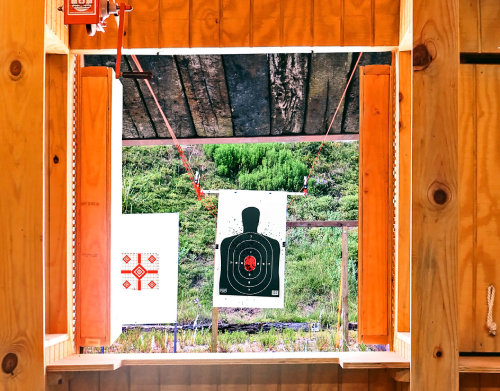
Testing is essential before relying on any ammo for self-defense. Firing multiple rounds of whatever brand you choose will help you confirm feeding and cycling reliability, accuracy and point of impact, recoil management, and smoothness of operation under stress. It will also affirm whether the firearm prefers that specific load.
Testing makes sure you know how your weapon behaves with the chosen defensive round. It’s worth purchasing an extra box or two and practicing regularly to keep your feel for the combination sharp.
How Able’s Ammo Helps You Find the Right Self-Defense Ammo
Able’s Ammo makes it easy to find ammo and buy your ideal self-defense ammo online. As a family-owned and operated company, we provide instant access to a wide variety of defensive and range ammunition and trusted brands we’ve vetted through experience. We also support you through your buying journey, delivering personalized recommendations based on your firearm and experience level.
Whether you’re choosing your first defensive setup or upgrading to a more advanced load, our team is here to guide you every step of the way. Explore high-quality home defense and self-defense ammo at Able’s Ammo today.
Finding the Right Home Defense Ammo
The best home defense ammo combines reliable stopping power with controlled expansion to avoid dangerous overpenetration. Choose rounds manufactured by trusted brands and test regularly to familiarize yourself with recoil and other factors. Contact Able’s Ammo directly if you’d like a personalized recommendation.